
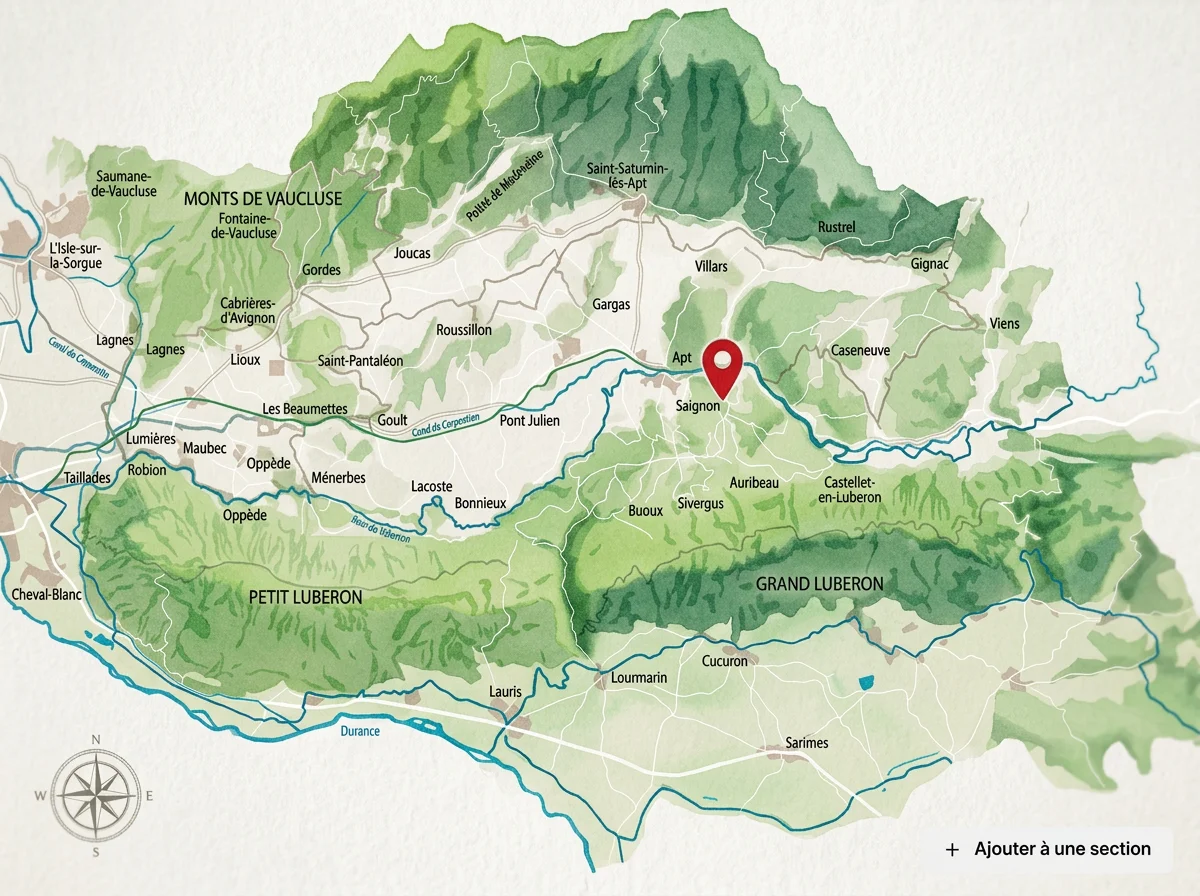
Heritage Sites to Visit
Culture and unique discoveries—highlights include:
The Bruoux Mines in Gargas: former ochre tunnels.
"Provençal Colorado" in Rustrel: colorful landscapes and well-maintained trails.
Lavender Museum: Learn about the history and uses of lavender.
Antique shops and flea markets in L’Isle-sur-la-Sorgue.
Artists' studios and exhibitions in the villages of the Luberon.
Auribeau
The Old Hilltop Village: a small stone village nestled in the foothills of the Grand Luberon.
The Church of Saints Peter and Paul: a religious building that is one of the main components of the built heritage.
The Landscapes of the Grand Luberon: terrain, hiking trails, and views of the surrounding countryside.
Rural heritage: terraced fields, dry-stone walls, and historic farmland.
Bonnieux
The hilltop village: winding, sloping streets, historic houses, and breathtaking views of the Petit Luberon and the valley.
The Old Church: a 12th-century church located at the top of the village, accessible via a staircase lined with cedar trees.
The New Church: a 19th-century building located in the lower part of the village.
The Julien Bridge: a magnificent Roman bridge dating from the 1st century B.C., located on the ancient Via Domitia.
The Cedar Forest: a remarkable natural area, perfect for walks and offering beautiful views.
Les Beaumettes
The Old Village: a small Provençal settlement with stone houses, set in a well-preserved rural setting.
The old quarries: traces of stone quarrying, an activity that has shaped the local landscape.
Agricultural heritage: vineyards, orchards, and rural landscapes at the foot of the Luberon.
Cabrières-d'Avignon
The Plague Wall: a dry-stone structure built in 1721 to protect the Comtat Venaissin from the plague epidemic.
The castle: a historic residence in the heart of the village, whose origins date back to the Middle Ages.
The old village: cobblestone streets and traditional houses.
The Sénancole Valley: a natural landscape of scrubland, low stone walls, and trails.
Caseneuve
The old hilltop village: narrow, ancient streets and stone houses, overlooked by the ruins of its medieval castle.
Caseneuve Castle: a former fortress that bears witness to the village’s feudal history.
Saint-Étienne Church: an historic religious building at the heart of the local heritage.
The landscapes of the Calavon Valley: hills, farmland, and panoramic views of the Vaucluse Mountains.Castellet-en-Luberon
The Old Village: traditional Provençal architecture, narrow streets, and stone houses.
The Church of the Invention of the Holy Cross: an ancient religious building in the heart of the village.
The castle ruins: traces of the local medieval history.
Agricultural and Natural Heritage: terraced fields, olive groves, farmland, and landscapes of the southern slope of the Grand Luberon.
Cavaillon
Notre-Dame-et-Saint-Véran Cathedral: a historic cathedral notable for its architecture and interior decoration.
The synagogue and the Comtadin Jewish Museum: an exceptional testament to the historical presence of the Jews of Le Pape in Provence.
Saint-Jacques Hill: a historic and natural site offering a panoramic view of the city and the Durance Valley.
The Hôtel d'Agar: a historic mansion housing art collections and a cabinet of curiosities.
The Roman Arch and the ancient ruins: evidence of Cavaillon’s importance in antiquity.
Cavaillon boasts a particularly rich architectural heritage, as evidenced by the designation of its historic center as a “Remarkable Heritage Site.”
White Horse
The Saint-Ferréol Chapel: an ancient religious building that bears witness to local history.
Agricultural heritage: landscapes of orchards, vegetable gardens, and irrigation canals.
The Régalon Gorges: a spectacular natural site in the Petit Luberon, featuring a narrow passage between high limestone cliffs.
Hydraulic Heritage: Canals and Structures Related to Irrigation in the Durance Plain.
Fontaine-de-Vaucluse
The source of the Sorgue: an exceptional natural resurgence at the foot of a cliff over 200 meters high, where the river begins.
The ruins of the bishops’ castle in Cavaillon: medieval remains perched above the village, linked to the history of Petrarch.
The Notre-Dame-Saint-Véran Church: an ancient building that houses, among other things, a Merovingian sarcophagus and remarkable religious works of art.
The paper mill: a place to learn about the historic paper-making industry that brought prosperity to the village.
The Galas Aqueduct: a 19th-century structure with thirteen arches, built to span the valley and the Sorgue River.
gargas
The Bruoux Mines: former underground ochre quarries, dug by hand beginning in the 19th century. Their impressive tunnels, which can reach heights of up to 15 meters, bear witness to the industrial history of the Luberon.
Perréal Hill: a remarkable natural and geological site offering beautiful panoramic views of the Luberon and the Vaucluse Mountains. It is home to the ruins of an ancient Gallic oppidum.
The Sainte-Radegonde Chapel: an ancient chapel located on Perréal Hill, a testament to the local religious heritage.
Saint-Denis Church: the village’s religious building, which houses, among other things, 17th-century paintings and tapestries.
Ochre Heritage: Gargas is one of the last places in Europe where ochre is still mined, notably by the Société des Ocres de France. The former industrial sites and ochre pits serve as reminders of this historic industry.
La Lustrerie Mathieu: a company specializing in the creation and restoration of exceptional lighting fixtures, which showcases its renowned artisanal expertise.
Gargas is best known for its industrial heritage related to ochre, its spectacular underground tunnels, and the geological richness of Perréal Hill.
Gignac
The Old Village: a small Provençal village with stone houses, narrow, historic streets, and a preserved rural atmosphere.
The Ochre Heritage: Gignac is part of the Apt region’s ochre-producing area, characterized by the historical extraction of natural pigments.
The ochre landscapes and marl formations of Perréal: colorful geological formations and remarkable natural environments.
The church and rural heritage: a testament to traditional village life, nestled among the hills and farmland.
goult
The old village: cobblestone streets, stone houses, and vaulted passageways typical of Provence.
The Jerusalem Mill: a restored historic windmill offering a beautiful view of the Luberon.
St. Sebastian Church: an historic building in the heart of the village.
The Terrace Conservation Area: dry-stone terraces that bear witness to traditional Provençal farming practices.
⇒ Lights
The hamlet of Lumières: a small historic village within the municipality of Goult, known for its religious heritage.
The Chapel of Our Lady of Light: an important Marian shrine that became a place of pilgrimage beginning in the 17th century.
Religious heritage: a testament to the Provençal tradition of pilgrimages and devotion to the Virgin Mary.
Gordes
Gordes Castle: an imposing medieval castle remodeled during the Renaissance, overlooking the central square.
Sénanque Abbey: a 12th-century Cistercian abbey, famous for its setting amid fields of lavender.
The village of Bories: a cluster of dry-stone huts that bear witness to traditional rural architecture.
The village's narrow streets: dry-stone houses clinging to the hillside and exceptional views of the Luberon.
L’Isle-sur-la-Sorgue
Waterwheels: remnants of the industrial and textile industry that brought wealth to the city as early as the Middle Ages.
The Notre-Dame-des-Anges Collegiate Church: a remarkable 17th-century Baroque building, famous for its richly decorated interior.
The canals and quays: the historic heart of the city, shaped by the waters of the Sorgue.
Antique shops and flea markets: a hallmark of the city, which is internationally renowned for its antique shops.
The Bouïgas Reservoir: a historic water management system associated with mills and irrigation.
Joucas
The old village and its cobblestone streets: sloping alleys, stone houses, and passageways typical of Provençal villages.
The former Templar commandery: a testament to the village’s medieval history and to the military religious orders.
The heritage of the Vaudois: a record of the settlement of the Vaudois who came from the Alps in the 15th century.
The village mill: the starting point for a walk that takes you through the old streets and the surrounding countryside.
Lacoste
Lacoste combines medieval heritage, literary history, and contemporary artistic creation.
Lacoste Castle: the ruins of a medieval castle associated with the Marquis de Sade, overlooking the village and the Luberon countryside.
The old village: cobblestone streets, stone houses, and beautiful views of the surrounding countryside.
Saint-Trophime Church: a religious building in the heart of the village.
Artistic heritage: the presence of studios, galleries, and artistic activities that contribute to the village’s identity.
Lagnes
Lagnes Castle: a medieval castle dating from the 13th century and remodeled in the 16th and 17th centuries.
The old village: narrow streets, historic houses, and Provençal-style facades at the foot of the Pieï Rock.
The Pieï Rock: an iconic landmark offering a panoramic view of the Luberon and the surrounding area.
Rural heritage: garrigue landscapes, historic farmland, and paths that bear witness to the region’s history.
Town of Lagnes
Lioux
The Madeleine Cliff: an impressive limestone wall with light and reddish hues, a defining feature of the Lioux landscape.
Javon Castle: an elegant historic residence located in the surrounding countryside, notable for its Renaissance architecture.
The Old Village: a small Provençal historic site with stone houses and a rural church.
Natural landscapes: cliffs, valleys, and trails offering beautiful panoramic views of the Vaucluse Mountains.
Key takeaway: Lioux is best known for the spectacular Madeleine Cliff and its well-preserved rural heritage.
Maubec
Old Maubec: a historic hilltop village with narrow streets, stone houses, and vaulted passageways.
The remains of the fortifications: traces of the old medieval village, built on the hillside.
Saint-Maurice Church: a religious building at the heart of the local historical heritage.
Agricultural heritage: landscapes of vineyards, olive groves, and vegetable farms at the foot of the Luberon.
Walls
Murs Castle: a medieval castle that has been remodeled over the centuries and overlooks the village.
The Old Village: traditional stone houses, narrow, historic streets, and an authentic Provençal atmosphere.
Saint-Loup Church: an ancient religious building that bears witness to the village’s history.
Rural heritage: terraced fields, bories, and traditional agricultural structures characteristic of the Vaucluse mountains.
Ménerbes
The hilltop village: listed among the Most Beautiful Villages of France, with its cobblestone streets and stone houses.
The citadel and the ramparts: remnants of the fortifications that played an important role during the Wars of Religion.
The Luberon Truffle and Wine House: a place to discover local gourmet products and traditions.
The Corkscrew Museum: a unique collection dedicated to this object and its history.
Artistic and literary heritage: a village notably associated with the writer Peter Mayle, who helped put the Luberon on the international map.
Oppede
Oppède-le-Vieux: a historic medieval hilltop village, notable for its cobblestone streets and stone houses.
The Notre-Dame-d’Alydon Collegiate Church: a Gothic church overlooking the village and offering a remarkable view of the valley.
The castle ruins: medieval ruins located at the top of the village.
Terraces and restanques: ancient agricultural structures that reflect how the inhabitants have adapted to the terrain.
Robion
The Old Village: narrow, historic streets and Provençal houses, with the Petit Luberon hills in the background.
Saint-Maurice Church: an historic religious building in the heart of the village.
The Old Quarries and Landscapes of the Luberon: Testaments to Stone Quarrying and Rural Heritage.
The trails of the Petit Luberon: paths winding through garrigue, terraced fields, and limestone landscapes.
Rustrel
The "Provençal Colorado": a former ochre mining site, famous for its red, orange, and yellow cliffs and chimneys. It is Rustrel’s most iconic site.
The old ochre quarries: a testament to the industrial activity that shaped the village’s history.
Rustrel Castle: a historic building in the heart of the village, linked to the local feudal history.
Rural heritage: stone houses, farmland, and the landscapes of the Luberon.
Saignon
The Rocher de Bellevue: an iconic rocky promontory offering an exceptional panoramic view of Apt, the Calavon Valley, and the Vaucluse Mountains.
The ruins of the medieval castle: remnants of the ancient fortress that overlooked the village, bearing witness to its strategic importance in the Middle Ages.
The Church of Notre-Dame de Pitié: a 12th-century Romanesque building, notable for its architecture and its location in the heart of the village.
St. Michael’s Chapel: a small Romanesque chapel located near the rock, a testament to the area’s religious heritage.
The medieval alleyways: cobblestone streets, stone houses, vaulted passageways, and historic facades that have preserved the village’s Provençal charm.
Place de la Fontaine: the vibrant heart of the village, with its historic fountain and large hackberry tree, an iconic spot in local life.
Rural heritage: terraced fields, dry-stone walls, olive groves, and the typical agricultural landscapes of the Luberon.
Key Takeaway: Saignon stands out for its spectacular panoramic rock formation, its medieval heritage, and its well-preserved narrow streets. It is a village where history, scenic beauty, and the Provençal way of life come together.
Saint Pantaleon
The Romanesque Church of Saint-Pantaléon: a small, ancient religious building typical of Provençal rural architecture.
The stone village: traditional homes and a peaceful atmosphere.
Agricultural heritage: vineyards, orchards, and cultivated landscapes at the foot of the Vaucluse Mountains.
Saint-Saturnin-lès-Apt
The ruins of the medieval castle: remnants of the castrum, its walls, and its keep, overlooking the village.
The dam and the mill: historic water-powered structures that bear witness to the use of water in rural life.
Windmills: Remnants of Traditional Farming.
The old village: narrow Provençal streets, ancient doorways, and stone houses.
The Landscapes of the Luberon: Panoramic Views of the Apt Plain and the Surrounding Hills.
Saumane-de-Vaucluse
Saumane Castle: a medieval castle remodeled during the Renaissance, associated with the family of the Marquis de Sade.
The Romanesque church: an ancient building in the heart of the village.
The cobblestone alleys and dry-stone houses: a typical architectural feature of hilltop villages.
Fountains and washhouses: a glimpse into daily life in days gone by.
The Landscapes of the Vaucluse Mountains: Panoramic Views of the Pays des Sorgues Plain.
Les Taillades
The Old Village: a hilltop village whose history is closely tied to stone quarrying.
The old stone quarries: cliffs and rock faces carved by the quarrymen’s work.
The medieval tower: a remnant of the old fortifications.
The castle and its grounds: a 17th-century complex, privately owned.
The Sainte-Luce Chapel: the village’s former church, a testament to its religious history.
Come
The hilltop medieval village: cobblestone streets, vaulted passageways, old houses, and fortified gates.
The medieval ramparts and gates: reminders of the village’s defensive past.
Saint-Hilaire Church: an ancient religious building that overlooks the village.
The castle ruins and historic houses: notable examples of the built heritage.
The landscapes of the Albion Plateau: unobstructed views of the Luberon hills and the surrounding countryside.